
Many home battery rebate Facebook ads running in Australia overstate the discount. That costs installers twice. You pay for leads who expected a nearly free battery, and you take on legal risk under the Australian Consumer Law.
Since the federal Cheaper Home Batteries Program started, a lot of feeds look the same. They show “Government pays for your battery,” a big savings claim and a countdown timer. The clicks come in, but many of the leads go cold the moment your salesperson gives them a real quote.
This post shows how to fix that in three parts. First, write rebate creative that is accurate. Second, use your lead form to check for existing solar and bill size. Third, aim your spend at owners who already have panels on the roof.
What the federal battery discount actually is, in words a homeowner understands
Before you write a single ad, get the program straight in plain language. Your ads can only be as accurate as your own understanding.
The Cheaper Home Batteries Program runs through the Small-scale Renewable Energy Scheme. An eligible battery installed by an accredited installer creates small-scale technology certificates. Those certificates have a market value. In most cases the installer applies that value as a discount on the quote. The homeowner does not usually get a check from the government.
Three things follow from that, and they matter for your ads:
- The discount is not a fixed dollar amount. It depends on the battery’s usable capacity and on what the certificates are worth when they are created.
- The discount steps down over time. The program was designed to reduce in stages, and the government has adjusted the settings since launch. Whatever you said in an ad six months ago may already be wrong.
- There are conditions. The installer has to be accredited, the battery has to be an approved product, and there are installation and connection requirements. Not every battery qualifies, and not every installer can claim it.
If you also mention state programs, check each one separately. They have their own rules and do not apply everywhere.
Where battery ads cross the line under the Australian Consumer Law
The Australian Consumer Law bans misleading or deceptive conduct and false or misleading claims about price. The ACCC can act on the overall impression an ad gives. A small print disclaimer does not fix a misleading headline.
Here are the patterns we see most often in solar battery Meta Ads, and why each one is a problem.
“Free battery” or “the government pays for it”
The program reduces the price. It does not make the battery free. If the customer still pays a meaningful amount, “free” is misleading. That stays true even if the gap is covered by finance or a bundled deal.
Implying you are the government
Ad names, page names or creative styled to look like an official government program are a risk. “Government battery scheme” with a coat of arms look-alike is the worst version. You are a private business taking part in a federal program. Say that.
Savings claims with no basis
“Wipe out your power bill” or “save thousands a year” depends entirely on the household’s usage, tariff, existing solar and battery size. If you cannot back the claim for a typical customer who sees the ad, do not run it.
Fake urgency
“Rebate ends Friday” when it does not end Friday is a false claim. You can say the discount reduces over time, because that is true. You cannot invent a deadline.
Finance dressed up as a discount
“Pay nothing upfront” or “zero cost” offers bring their own disclosure obligations. If finance is part of your offer, get proper advice before you advertise it.
Meta’s own advertising standards also restrict misleading claims. A rejected or restricted ad account is a real business cost on top of the legal risk.
Writing home battery rebate Facebook ads that stay accurate and still sell
Accurate does not mean boring. The best performing honest ads give the homeowner something specific to think about. Here is how we approach the creative.
Lead with the real reason to buy. Most people who buy a battery want to use more of their own solar at night, rely less on the grid at peak times or keep some power on during outages. The rebate is a reason to act now, not the whole pitch.
Describe the discount truthfully. Something like: “The federal Cheaper Home Batteries Program reduces the upfront price of eligible batteries. We’ll show you exactly what it takes off your quote.” That is true, and it invites an inquiry.
Name who it suits. “Already have solar and a big evening power bill?” filters the audience in one line. People without solar scroll past. That is fine, because you were not going to sell them a battery-only job anyway.
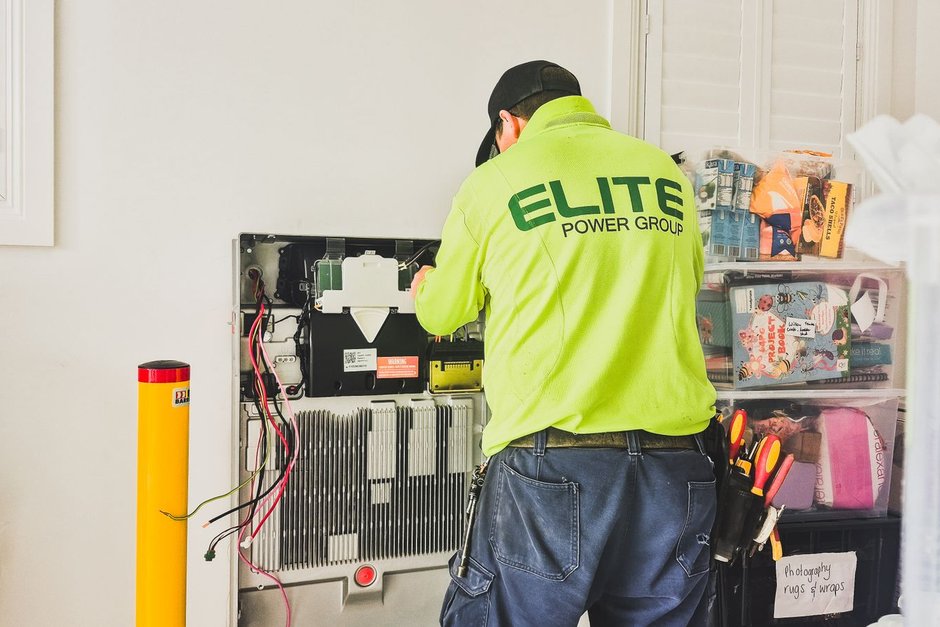
Show real installs. Use photos or short videos of your own jobs: the battery on the wall, the app on the owner’s phone, your crew in uniform. Skip stock images of sleek batteries in houses that are not Australian.
Match the landing page to the ad. If the ad says “see what the rebate takes off your quote,” the form or page should deliver on that. It should not open with a pushy “book now” wall.
Date-check your copy. Put a reminder in your calendar to review every live ad whenever program settings change. Old creative is where accurate ads quietly turn inaccurate.
Qualifying existing solar and bill size before a lead hits your phone
Cheaper home batteries program leads are only useful if your team can quote them. The fastest way to cut wasted calls is to ask the right questions inside the form. Meta’s instant forms let you add custom multiple choice questions. You can also choose a form type that adds a review step before the person submits. That step adds a little friction, which usually helps lead quality for a considered purchase like a battery.
Here is the setup we recommend. Hand it to whoever builds your ads or your website:
- Ask “Do you already have solar panels?” Give three answers: yes, no, and planning to add solar too. Route each answer to a different follow-up script.
- Ask about the last power bill using bands, not an open text box. Set the bands to suit your area and the customers you actually close. Someone with a small bill is rarely a good battery fit, and you want to know that before you call.
- Ask “Do you own the home?” Renters usually cannot sign off on an installation, however keen they are.
- Ask for the postcode and check it against your service area. Do not pay to chase jobs you cannot reach.
- Ask about timing. “Within a month,” “within three months” and “just researching” each deserve a different response speed.
- Ask how they want to be contacted. Offer a phone call, a text message or email. Plenty of Australian homeowners would rather get a text first than a cold call during work hours.
- Write a short, honest intro screen. Say who you are and that you are an accredited installer. Say the discount depends on the battery and the program rules at the time of install.
- Send every lead into your CRM with the form answers attached, so your salesperson sees the solar and bill answers before dialing.
If you send traffic to your own landing page instead of an instant form, ask the same questions there. Tag every ad link so you can see which ad produced which lead. Our free UTM link builder makes that quick.
Targeting owners who already have solar, without guessing
Meta does not offer a reliable “has solar panels” targeting option in Australia. Do not believe anyone who says it does. You reach existing solar owners with a mix of your own data, location and creative that does the filtering.
Start with the customers you already have
If you have installed solar for years, your past customer list is your best audience. Upload it as a custom audience, but only where your privacy policy and how you collected the details allow it. Those people already trust you, already have panels and may have been waiting for battery prices to come down. Exclude anyone who has already bought a battery from you.
Build lookalikes from buyers, not from leads
A lookalike based on people who actually bought a battery tells Meta far more than one based on everyone who filled in a form. If your buyer list is small, start with past solar customers and narrow it later.
Use location the way you quote
Target the suburbs and regions you actually service. Raise budgets in areas where your installers can get to jobs easily. If you know certain suburbs have lots of rooftop solar from driving past jobs, give them more weight.
Let the creative do the filtering
With broad delivery, including Meta’s Advantage+ audience, the ad itself decides who responds. A headline that opens with “Already have solar?” plus the solar question in the form does more qualifying than any interest setting.
Retarget people who engaged
People who watched most of an install video or opened your form but did not finish are warmer than a cold audience. Show them a different ad. For example, show how the discount appears on a real quote, with the customer’s details removed.
If you want this built and run for you, see how we handle Meta Ads for battery backup installers.
Telling Meta which battery leads turned into installs
Here is the catch with battery installer lead generation. If you only report form submissions back to Meta, it will find you more people who fill in forms. It will not find more people who sign quotes.
Fix that by marking leads in your CRM as they move through the stages: contacted, site visit booked, quote sent, signed, installed. Then send those stages back to Meta through the Conversions API, so the system learns what a good battery buyer looks like. Our page on Meta Ads conversion tracking explains how that connection works.
When you can see which ads led to signed jobs, the honest ads usually look much better than their cost per lead suggests. The “free battery” ads usually look worse.
Frequently asked questions
Can I say “save” in my battery ads at all? Yes, if the claim is accurate for the people who see it. “The federal program reduces the upfront price of eligible batteries” is safe. A specific yearly bill saving is risky unless you can back it up for a typical customer in your target area.
Should I put the rebate dollar amount in the headline? We would not. The discount depends on the battery’s capacity and the certificate value at the time, and it steps down over time. A dollar figure in an ad can become wrong without you noticing. Show the real figure on the quote instead.
What should we do with leads who don’t have solar yet? Do not throw them away. Send them to a separate follow-up for solar plus battery packages. Keep them out of your battery-only call list, and keep them out of the buyer data you feed back to Meta.
Our competitors run “free battery” ads and get cheap leads. Why shouldn’t we? Cheap leads that expect a free product rarely sign. You also carry the risk if the ACCC or Meta takes action against the claim. Track signed jobs by ad, and the comparison usually settles itself.
Is it a problem to call our ads “government battery rebate” ads? Referring to the federal program by name is fine. Wording, logos or page names that suggest you are the government, or that you run the program, are where the risk starts. Make it clear you are an accredited installer taking part in it.
How often should we review our rebate creative? Review it whenever program settings change, and do a quick check every month regardless. Pause anything that mentions a figure, a deadline or a condition that no longer applies.
Your next step
This week, open your Meta Ads account and read every live battery ad out loud. Pause any ad that says “free,” quotes a fixed rebate amount, sets a deadline or implies you are the government. Then add the “Do you already have solar?” question to your lead form before you spend another dollar.
If you want a second pair of eyes on your ads and lead flow, Chat with us on WhatsApp.