
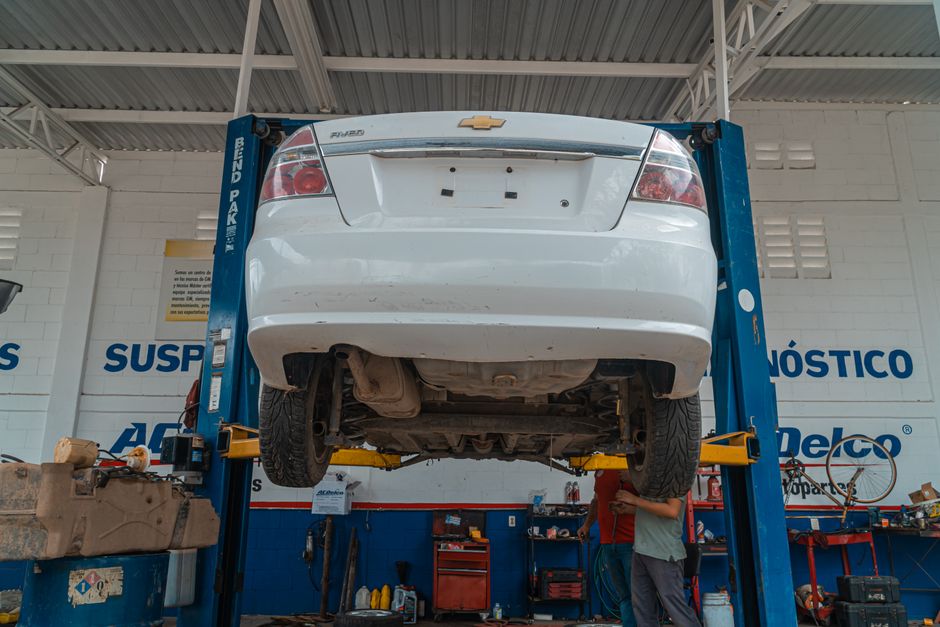
Australian motorists do not browse auto repair sites for entertainment. They arrive after a warning light, a failed roadworthy, a grinding noise on the freeway, or a smash that needs panel and mechanical work before the insurer signs off. Brisbane heat that cooks batteries is a seasonal landing-page trigger - September-November battery pre-check campaign pages match real search demand - just as Melbourne’s wet winters push brake and battery work and Sydney traffic drives many high-intent searches from the car itself. The decision window is short. They want a workshop that looks competent, answers fast, and makes booking feel low-risk.
That is why Web and landing page design matters more than most workshop owners admit. A pretty homepage is not the product. The product is a page that turns a high-intent search or ad click into a booked bay - without forcing the customer through three phone trees, a vague “contact us” form, or a site that crawls on mobile data. This guide is about what actually converts on auto repair websites in Australia: proof, speed, form design, trust signals, and the behaviour gaps that quietly kill jobs.
If you run a workshop or multi-site group and paid or organic traffic is not turning into booked work at the rate it should, the leak is usually on the page - not in the keyword list.
Why auto repair websites lose booked jobs in Australia
Most workshops do not fail at getting attention. They fail at converting the attention they already paid for. A driver Googles “logbook service near me”, “timing belt replacement Melbourne”, or “roadworthy certificate Brisbane” and lands on a site that was built like a brochure: hero image of a hoist, a paragraph about “family-owned since 1998”, and a phone number buried in the header. On a phone at the side of the road, that layout is friction.
Common failure modes show up again and again. The primary call-to-action is “Call now” with no online booking or short form for people who cannot talk in a noisy car park. Trust is asserted (“quality workmanship”) instead of shown (licence numbers, OEM affiliations, real job photos, Google review volume with recent dates). Service pages try to rank for everything - brakes, clutches, diesel, European, 4WD, air conditioning - so the visitor never sees a focused path for the job they actually need. Mobile load time is often slow on real Australian connections, and the form asks for registration, VIN, preferred date, and a novel-length description before anyone will respond.
There is also a response-speed problem that websites make worse. A lead submitted at 7:15 am before the workshop opens sits until the first admin unlocks the inbox. By 9:30 the customer has already booked the chain workshop that texted back in four minutes. Landing pages for auto repair Australia only work when the page and the ops loop behind it are designed together: clear offer, low friction capture, and a defined first-response SLA.
Consider a composite scenario based on common patterns we see: a mid-size independent in Perth’s northern suburbs, roughly eight staff and three hoists. They spent solid money on search ads for logbook servicing and brake work. Clicks were cheap enough; booked jobs were not. The landing page led with a full menu of every service they offered, a stock photo of a European sedan, and a form with nine fields. Heatmaps later showed most mobile sessions never scrolled past the fold. The fix was not “more traffic”. It was a single-job page, three fields, proof above the fold, and an SMS alert to the service advisor. Same spend, materially more bays filled - in patterns like this, booked jobs from paid search often move from around four per week toward double digits over roughly six weeks once friction and focus are fixed.
Another pattern: multi-location groups that push every suburb to the same corporate homepage. A driver in Adelaide searching for a specific repair does not want a national brand story. They want the local number, the local reviews, and confirmation that this site handles their make. Generic pages dilute intent and make paid campaigns look worse than they are.
Trust signals that convert for Australian mechanics
High-intent auto repair traffic in Australia clusters around a few job types: scheduled servicing and logbooks, brakes and suspension, batteries and roadside-adjacent work, air conditioning before summer, diesel and DPF issues, European specialists, smash and insurance-related mechanical, and roadworthy or safety certificate work depending on the state. These searchers are not early-stage researchers. They are comparing two or three options and will book the first one that feels safe and easy.
What they need on the page is narrower than most sites deliver. First, a plain-language statement of the job and the area served - not a slogan. Second, proof that reduces perceived risk: recent Google rating with review count, mechanic qualifications or manufacturer program badges, photos of the actual workshop and team (not a stock bay in another country), and clear pricing cues where you can give them (e.g. “logbook service from $X for common models” or “free brake inspection, no obligation”). Third, a path to act in under thirty seconds: tap-to-call, short form, or real-time booking if you run it properly.
Trust signals that carry weight locally include ABN visibility, workshop address that matches Maps, after-hours or same-day options stated honestly, warranty terms on parts and labour, and how you handle courtesy cars or drop-offs. Strata and fleet customers care about invoices, purchase orders, and turnaround commitments; retail motorists care about not getting upsold into a nightmare. Your page should signal which world you operate in.
A useful directional benchmark: many independent workshops see enquiry-to-book rates improve when the landing page speaks to one job family and one primary CTA, versus a homepage that tries to be the whole business. Exact percentages vary by suburb and offer, but the pattern is consistent - focus beats encyclopaedia layout when someone already knows they need brakes this week.
Soft proof beats hype. “We care about your car” converts poorly next to “4.8 stars from 320+ Google reviews · Bosch Car Service · Same-day diagnostics on most makes”. Australians are sceptical of glossy claims; they respond to evidence they can verify in two taps.
Building landing pages that convert for Australian workshops
Treat landing pages as job-getters, not brand monuments. For paid search and high-intent organic landing, build around a single primary job or tightly related cluster: “Logbook servicing - North Shore Sydney”, “Brake replacement - southside Brisbane”, “European specialist servicing - Melbourne inner”. Match the headline to the query. If the ad promised a roadworthy inspection, the page must open on roadworthy - not a generic “full mechanical workshop” hero. State-correct language matters here: searchers distrust a page that says “roadworthy” when their state uses pink slip, RWC, or safety certificate terminology, and compliance windows differ (for example QLD’s common 30-day certificate validity versus Victoria’s different regime). Landing copy should match the local term and the real validity rules or high-intent visitors bounce.
Above the fold on mobile, prioritise: headline with job + suburb or region, one-line differentiator, star rating and review count, and a single primary button (Call or Book / Get a quote). Put the phone number as a true click-to-call link. Keep secondary links minimal; every extra nav item is a chance to bounce.
Forms should ask only what the advisor needs to respond intelligently: name, mobile, vehicle make/model or rego, and a short “what’s wrong / what do you need” field. Optional photo upload helps for body and tyre issues but should never block submit. Every extra required field costs completions. If you need more detail, collect it on the phone or in a follow-up SMS once the lead is warm.
Seasonal demand should show on the page, not only in your ad schedule. Pre-summer A/C rush in QLD and northern NSW, pre-winter battery and starting-system push in VIC and SA, and post-holiday logbook catch-ups are predictable spikes - swap the hero offer dynamically or run seasonal page variants so the first screen matches why people are searching that month.
Page speed is not a vanity metric in this niche. Mechanics’ customers are often on mobile, sometimes on the roadside or in a lunch break with spotty coverage. Compress images of cars and bays aggressively, lazy-load below-fold galleries, and avoid heavy sliders and auto-play video. Google’s field data threshold for a ‘good’ FCP is under 1.8 s; most AU independent workshop sites we audit land between 3.5-6 s on a mid-range Android. If the call button is not usable quickly, you paid for a bounce.
Tracking has to be honest. Use unique phone numbers or call tracking on campaign pages, thank-you pages that fire conversions only on real submits, and a simple CRM or even a shared inbox rule so every web lead gets a timestamped first response. Without that, you cannot tell whether the page or the follow-up is the problem - and you will keep pouring budget into the wrong fix.
For workshops ready to systematise this, structured Auto Repair marketing usually pairs landing page design with offer clarity and response process, not ads alone. The page is the handshake; ops is the grip.
Implementation sequencing that works for a typical independent: week one, pick the top two money jobs and draft one focused page each with proof and a three-field form; week two, fix mobile speed and click-to-call, wire thank-you conversion events; week three, set SMS or phone alerts so leads never sit; week four, review recordings and heatmaps and cut anything that distracts from the CTA. Do not rebuild the whole site first. Ship the pages that pay for the rebuild.
Get a free marketing audit - we review your search, ads, and landing pages and send back what to fix first.
Get a free audit

How to reduce friction on your workshop booking page
Conversion on auto repair sites is a stack, not a single trick. Proof answers “can I trust these people with my car and my money?” Speed answers “will this waste my afternoon?” Friction answers “how hard will they make it to start?” Miss any layer and high-intent traffic underperforms.
Proof blocks that pull weight: Google reviews embedded or linked with recent snippets (mention makes and job types when possible), manufacturer program logos you actually hold, before/after only when honest and consented, team bios with years and specialisations, and clear warranty language. If you service European or 4WD specialist work, say so with model examples. If you are a generalist suburban workshop strong on logbooks and brakes, own that - do not fake specialist theatre.
Response speed is part of the page experience even though it happens after submit. State what happens next: “We aim to call within 15 minutes in business hours” or “Text us the fault - we reply with next steps.” Then meet the promise. A beautiful form that feeds a black hole trains customers to use the national chains.
Friction hides in polite design choices. Pop-ups that cover the CTA on mobile, chat widgets that obscure the call button, multi-step forms that feel like insurance applications, and “request a callback” flows with no time expectation. Also watch PDF price lists and buried menus that force desktop habits onto phone users. In this market a high proportion of workshop searches happen from a vehicle - hands-free or one thumb in a car park - so click-to-call failure is more costly here than in office-based service categories. Google’s own AU search data shows auto repair peaks between 7-9 am and 5-7 pm commute windows; friction at those hours has outsized impact. Every workshop site should be tested on a mid-range Android on 4G, not only on the owner’s office broadband.
Trade-off to know: ultra-short forms raise volume and can lower lead quality if you attract tyre-kickers. The balance for most AU independents is three to four fields plus a free-text symptom box - enough to prioritise the queue, not so much that a stressed driver abandons. If quality drops, tighten the headline and offer rather than punishing everyone with a longer form.
Hidden cost: building one mega-page for all services looks efficient and measures poorly. Campaigns pointing to that page produce muddy data, and the visitor who needed a battery at 6 pm leaves because the content opened on fleet contracts. Separate URLs for separate intents cost a little more to maintain and return clearer ROI signals.
Using behaviour data to find the leaks
Assumptions about why “the website doesn’t work” are usually wrong. Owners blame price, the suburb, or Google. Often the session tells a simpler story: users tap the call button that is not a link, rage-click a non-clickable map, start the form and drop at the rego field, or never see the CTA because a cookie banner and chat bubble ate the fold.
This is where behaviour tools earn their keep. Session recordings and heatmaps - the kind of on-page insight available through HeyLead Insights - show where auto repair visitors hesitate, which proof they expand, and which devices fail. You are not looking for vanity heat; you are looking for abandonment patterns tied to real jobs. If mobile users consistently stop at the same scroll depth, move proof and CTA up. If desktop users hit the form but mobile users call and hang up, check number formatting and click-to-call.
Run a simple monthly loop: sample recordings from paid landing pages, note the top three friction points, fix one page at a time, and compare enquiry rate and booked-job rate over the next fortnight. Directionally, workshops that treat recordings as a maintenance task - not a one-off audit - stop arguing about opinions and start fixing the step that loses money.
Operational scenario: a Gold Coast workshop group running ads into three locations noticed strong click-through on “air conditioning regas” but weak form completes. Recordings showed users opening the price section, then hunting for “includes dye / leak check” detail that sat in an FAQ accordion three scrolls down. They pulled two sentences and a from-price into the hero subhead. In patterns we see repeatedly, surfacing the dye/leak-check detail above the fold typically lifts completion rates by 8-15 percentage points on this job type - for example from roughly 8% to 19%. That is a page problem solved with behaviour evidence, not another budget increase.
Another failure mode: teams install analytics, never watch a session, and keep A/B testing button colours. Colour rarely fixes a missing licence number, a slow LCP, or a form that demands a fleet account number from private owners. Watch ten real sessions before you test cosmetics.
What the conversion lift looks like
A two-site group in Brisbane’s northside saw form completes rise from 11% to 28% after cutting a long multi-field form down to name, mobile, and car model and placing recent Google reviews beside the primary button - same traffic, clearer path to book.
An independent focused on brakes and compliance work split those jobs onto separate landing pages so the ad promise matched the page. Calls aligned with campaign intent, and advisors stopped burning time on the wrong job type within the first month.
FAQ
Do I need a separate landing page for every service?
Not every minor service, but yes for the jobs that drive margin and campaign spend - typically logbook/service, brakes, specialist categories you advertise, and compliance work like roadworthy where relevant. Homepages can support brand and navigation; paid and high-intent organic should land on focused pages.
How fast should we respond to web leads?
Under 15 minutes in business hours or you are training customers to book the chain that texts back first. After hours, an auto-reply with a clear next-step time beats silence every time. Measure first response; do not assume the front desk keeps up on busy days.
What proof matters most on an Australian auto repair page?
Recent Google reviews with volume, a verifiable address and phone, genuine workshop photos, qualifications or program affiliations you hold, and plain warranty or guarantee language. Local relevance beats generic stock imagery.
Should we push online booking or phone calls?
Phone for same-day and fault diagnosis; form or booking tool for logbooks and scheduled work. If your front desk can’t answer in 3 rings during peak, lean harder on the form - a missed call is a lost job.
Free tools
DIY free tools for this playbook
Run these on the pages and campaigns this article covers, then fix what they flag before you scale spend or content volume.
Run these on this playbook
If the checklist shows a leak you cannot close in-house, request a free marketing audit.
Putting it to work
Execution sprint
This week
- Pull 30-90 days of performance for what converts on an auto repair website (Search Console, ads, CRM, or call logs - whatever you have).
- Flag the top leak: wrong intent, weak page, slow response, or dirty conversion tracking.
- Ship one fix on the highest-traffic money path (page, campaign split, or response rule).
- Run the free tools below on that same URL or account and log the findings.
Free tools for this sprint
Next 30 days
- Expand the fix to the next one or two money paths only after the first one shows cleaner bookings.
- Align creative, keywords, or content with the same offer the page now states.
- Review booked outcomes weekly; cut anything that still only produces unqualified volume.
Pick your highest-value job this month - the one already getting clicks or phone enquiries - and build or rebuild one mobile-first landing page around it. Put proof and a single CTA above the fold, cut the form to essentials, wire click-to-call and conversion tracking, and set an alert so no lead sits. Then watch real sessions for a week and fix the first friction point you see.
When traffic is decent but bays are not filling, the honest next step is page and process, not another random tactic. If you want a second set of eyes on landing page structure, proof placement, and behaviour leaks for your workshop, HeyLead can help you tighten the path from click to booked job.
Free marketing audit, or reach Martin directly:
Get a free audit Connect on WhatsApp · martin@heylead.com