
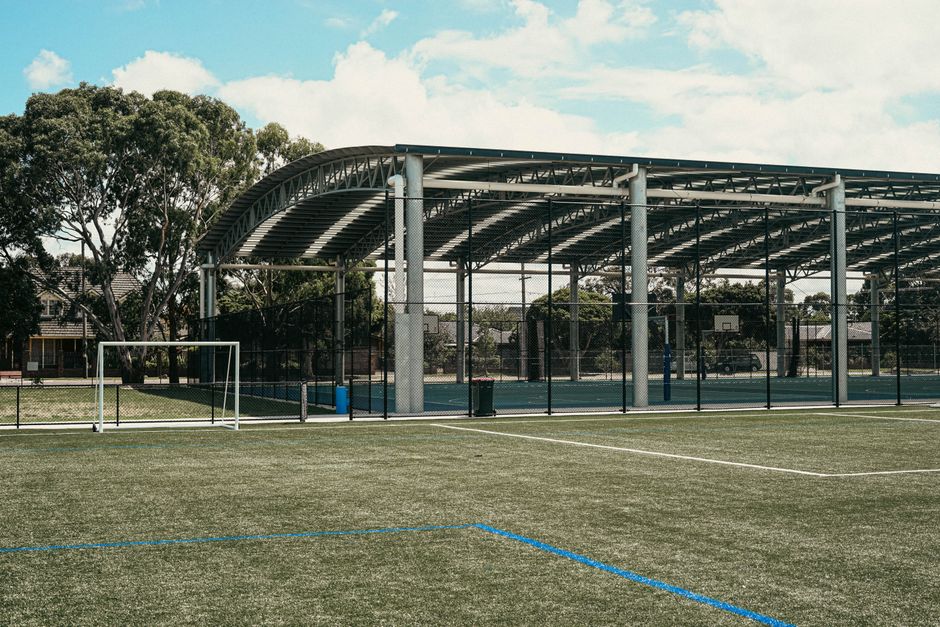
A 6-court indoor centre in Dandenong can spend $180 before lunch on “basketball near me” and still have empty 5 p.m. slots. The clicks look healthy. The diary does not. That gap is the real job of Google Ads for sports and recreation companies in Australia: buy the searches that fill courts, lanes, and memberships, not the ones that fill a dashboard.
Australian rec operators sell time-boxed inventory. A wet Saturday in Brisbane kills outdoor tennis and floods indoor cricket. School holidays in NSW empty weekday learn-to-swim and pack kids’ birthday packages. GST sits on every invoice, so even a headline ROAS of 4x only matters if contribution after GST, coach wages, and no-shows still works. Search CPC sitting near $2.96 (up about 12% year on year) makes lazy query coverage expensive fast.
This piece is a working setup for AU rec marketers: how demand actually shows up in Google, how to structure Search and Performance Max without burning winter membership budget, what the landing page has to do in 20 seconds on a phone, and how to keep Smart Bidding honest when half your bookings still happen at the front desk.
What AU rec searchers type when they are ready to pay
You will not win by bidding on “sport” and hoping Google’s AI sorts it. People who will pay this week type jobs: “indoor cricket nets Penrith tonight”, “netball court hire Chatswood Saturday”, “learn to swim waiting list inner west”, “kids birthday party trampoline park Gold Coast”, “gym membership no lock in Perth”. Those phrases carry time, suburb, and a commercial verb. Broad “recreation centre Melbourne” traffic is mostly browsers comparing photos.
Intent clusters beat keyword lists. Build four buckets and keep them in separate campaigns so you can see which one actually books: (1) facility hire by hour, (2) term programs and lessons, (3) memberships and multi-visit passes, (4) events and parties. Mix them and Smart Bidding will chase the cheapest form, which is usually a “contact us” from someone asking if you have a cafe.
Mobile still takes 63%+ of paid search clicks, and rec conversion on mobile often lags desktop by 30-40% because the page asks for a 12-field enquiry instead of a 15-minute slot. If your ad promises “book a court in under a minute” and the landing page opens on a hero video of last year’s grand final, you paid for a tourist.
Seasonality is not a footnote. Footy finals, NAPLAN weeks, and the January swim rush change query mix more than any audience layer. Pause or throttle “school holiday camp” the week term starts. Push “off-peak membership” when 10 a.m. weekday squash is empty. Operators who leave the same ad group live all year quietly donate 20-30% of SEM budget to irrelevant queries, neglected negatives, and pages that do not match the ad.
If you already send paid traffic to the homepage, stop. Dedicated pages aligned to the ad are the line between a media plan and a booking engine. A short look at Google Ads management is useful only after you know which of those four intent buckets actually fills your diary.
Account structure that survives GST, walk-ins, and school holidays
Fewer campaigns, cleaner signals. Rec accounts die when every suburb, sport, and offer gets its own campaign and learning never finishes. For a single-site operator in Adelaide, three Search campaigns plus one tightly themed Performance Max asset group is enough. Multi-site groups (a 4-centre swim school across Sydney’s inner west) can split by site only if conversion volume per site can feed bidding. Otherwise use location assets and site-level landing pages, not eight starved campaigns.
Search still needs keywords. “Signals over keywords” is true for bidding and audiences, not an excuse to dump exact match on “indoor rock climbing birthday party 8 year olds”. Keep exact and phrase on the money phrases. Use broad only where you have negatives, a conversion action that means “paid booking or membership start”, and a landing page that can absorb the extra query shapes. AI Max-style automation can cut CPCs 12-18% versus sloppy Search, but only if the conversion you feed it is not a newsletter signup.
Performance Max will drive bulk volume if you let it. That is fine when the asset group is “term 2 netball clinics, 8-12 years, Inner West” with price, suburb, and a bookable calendar. It is not fine when PMax is a dump of every sport photo you have and a “learn more” button. The Melbourne racquet group saw cost per occupied hour fall after switching to CourtReserve checkouts as the conversion signal - that is the prerequisite, not a ROAS target. Do not expect that from a feed of generic lifestyle shots and a homepage URL.
GST-aware bidding is the Australian twist. If a court hour is $88 inc GST, your true revenue for ROAS is not $88. Coach cost, energy, and no-show risk sit under that. Set target ROAS or tCPA against contribution, not top-line. Operators who chase platform ROAS of 4.2x and then wonder why the P&L is flat usually forgot GST and labour.
Audit scorecard
-
Conversion action is a booking, not a formCount completed court bookings
Conversion action is a booking, not a formCount completed court bookings, membership checkouts, or paid deposits. If the front desk still takes cash walk-ins, import those offline within 24-48 hours or Smart Bidding will starve the queries that actually walk in.
-
Negatives match AU rec junkAdd jobs, volunteering, free, council grant,
Negatives match AU rec junkAdd jobs, volunteering, free, council grant, wholesale equipment, “how to become a coach”, and rival brand names you cannot serve. Review search terms after every school-holiday spike. Twenty to thirty percent of spend still leaks here in neglected accounts.
-
Location is a suburb, not a radius guessPresence in or regularly in is n
Location is a suburb, not a radius guessPresence in or regularly in is not the same as people who searched “near me” while driving past. Use location bid modifiers for your true catchments (e.g. 8 km around a North Shore pool, not all of Greater Sydney).
-
Ad copy names the slot, the price band, and GST-inclusive reality“Courts
Ad copy names the slot, the price band, and GST-inclusive reality“Courts from $42/hr inc GST, book tonight” beats “premier multi-sport precinct”. RSA and sports-betting adjacency is a non-issue for most rec, but kids’ offers still need honest age ranges so you do not attract adult social players to a U10 clinic.
-
Landing message match in under a foldHeadline, suburb, sport, next avail
Landing message match in under a foldHeadline, suburb, sport, next available time, and a book button. Parking, wet-weather indoor alternatives, and cancellation rules sit below. If Core Web Vitals fail on mobile, you are paying Google to bounce. CrUX data from Q1 2025 shows fewer than 60% of origins pass all three Core Web Vitals. Rec sites with hero carousels are often in the fail group.
-
Enhanced Conversions on, account in the operator’s MCCYou lose 20%+ of c
Enhanced Conversions on, account in the operator’s MCCYou lose 20%+ of conversion data to ad blockers and privacy gaps. First-party data and Enhanced Conversions keep bidding from going blind. Keep the Google Ads account in the centre’s (or group’s) login so you are not locked out if an agency relationship ends.
Get a free marketing audit - we review your search, ads, and landing pages and send back what to fix first.
Get a free audit

The landing page a parent will use from a wet car park
Most wasted rec spend dies after the click. The ad said “book a lane, North Lakes, tonight”. The page is a 4,000-word club history with a buried “timetable PDF”. Parents decide in about 30 seconds with a toddler in the back seat. They need next slot, price inc GST, and a button that does not open a PDF.
Build one page per intent cluster, not per keyword. Court hire pages need a calendar or a “call to hold a court” with click-to-call. Lesson pages need term dates, age bands, and waitlist vs vacancy. Membership pages need the lock-in truth in Australia: many buyers will bounce if “no lock-in” is in the ad and a 12-month contract is in the fine print. Party pages need capacity, food rules, and a deposit amount.
Watch behaviour, do not guess. Session recordings show whether people tap the timetable and then abandon because it is an image, not a bookable grid. HeyLead Insights is built for that post-click leak: scroll depth on the price block, rage taps on a non-working “book now”, form fields that kill mobile conversion. One rec marketer in Western Sydney cut enquiry forms from 11 fields to name, mobile, preferred hour, and saw booked trials move even while CPC stayed ugly.
Page speed is not a vanity metric when 63% of clicks are phones on 4G in a car park. Compress the team photo. Kill autoplay video. Keep INP snappy on the date picker. If you cannot pass Core Web Vitals, fix that before you raise budget. A faster page will often return more than another $1,000 in Search.
Action checklist
- Export 90 days of search terms. Tag each as hire, lessons, membership, party, or junk. Pause junk. Write one RSA per remaining cluster with suburb + sport + next action.
- Map each cluster to a unique landing URL. Same H1 as the ad. Price inc GST in the first screen. Click-to-call for after-hours indoor cricket when the calendar is closed.
- Set primary conversion to paid booking or membership start. Secondary: call > 45 seconds, waitlist join. Do not let Smart Bidding optimise to the waitlist if you have empty peak courts.
- Turn on Enhanced Conversions and UTM everything so GA4, the booking system, and Google Ads can be reconciled weekly, not in a monthly fog.
- Daypart around your real capacity. Do not buy 11 p.m. “gym near me” if staff lock the doors at 9. Rec search has a wrong hour of the week just like retail. Match spend to when a human can confirm a slot.
- After two weeks, kill any ad group whose search terms never mention a sport, a suburb, or a commercial verb. Reallocate to the cluster with the best cost per paid booking, not the best CTR.
Free tools - try these yourself
When Smart Bidding looks broken in a leisure group
Automated bidding inflates spend when the conversion you taught it is junk. A multi-site racquet group in Melbourne fed “form submit” into tCPA. Google found cheap forms from people asking about wheelchair access PDFs and corporate vouchers the centres could not fulfil. CPA looked great. Occupancy on peak courts did not move. They switched the primary action to a completed CourtReserve checkout and imported walk-in memberships nightly. tCPA rose for 11 days, then cost per occupied hour fell because the algorithm finally had a paid outcome.
High CPC pressure makes people snap back to manual CPC on new accounts. That can be right for the first 50 conversions if you have no signal. It is wrong as a long-term religion. Manual bidding cannot see that “indoor cricket birthday” at 4 p.m. Saturday is worth 3x “cricket coaching near me” on a Tuesday. Give it clean events, then let it work. Constant structure changes reset learning. Change offers and landing pages more often than campaign skeletons.
Attribution will not match last-click, GA4, and the till. Last-click double-counts. Privacy drops 20%+ of tags. Front-desk cash never hits Google. Treat in-platform CPA as a directional lever, not the board pack. Unify on bookings and membership starts in the booking system, then ask Google to bid toward those imports. Unified marketing measurement is the CFO conversation. Channel scorekeeping is the weekly optimisation conversation. Do not confuse them, and do not promise a ROAS number before you have seen the account, the pages, and unit economics. Realistic lift takes 3-6 months of clean signal, not a week of PMax.
AI Overviews now sit on a large slice of informational queries and can cut CTR hard. That hurts “what is pickleball” content more than “hire pickleball court Bondi”. Paid still buys the commercial SERP. Keep organic for the education layer if you want, but do not starve Search because zero-click news scared you. Rec money is in the bookable query.

FAQs
Should a single-site AU rec centre even run Performance Max?
Yes, once Search has a clean booking conversion and you can feed PMax a tight asset group (one sport or one offer, real photos, price, suburb). Do not turn PMax on as a junk drawer for every program you run.
What is a sensible starting budget in AUD?
Enough to get 30-50 true booking conversions a month in your dearest cluster, or you will starve bidding. For many suburban centres that is a few thousand dollars, not $15 a day across six sports. Fees on top of media often run as a retainer or 10-20% of spend. Do not buy a $8k-$25k management story if your media is $2k.
What does Google Ads management typically cost for an AU rec centre?
Typically a retainer or 10-20% of spend; for a $3k-$5k media budget that is $400-$1,000/month. Pair that with a conversion action that is a paid booking, not a form, or you are paying for dashboards instead of occupied hours. If you need that loop run for you, start with Google Ads management.
Do we need separate campaigns for each suburb?
Only if each suburb has enough conversions. Otherwise one campaign, location assets, and landing pages that name the suburb in the H1. Split when a second site has its own P&L and diary.
Why does Google’s CPA disagree with our booking software?
Walk-ins, phone holds, ad blockers, and last-click overlap. Import offline conversions and treat Google’s number as a bid signal. Reconcile weekly against paid bookings inc GST, not against form volume.
Is “near me” still worth buying?
Yes when the ad and page offer a trial, a court tonight, or a class with vacancies. No when “near me” lands on a brand film. Match the query to a bookable next step.
Putting it to work
Execution sprint
This week
- Pull 30-90 days of performance for sports and recreation (Search Console, ads, CRM, or call logs - whatever you have).
- Flag the top leak: wrong intent, weak page, slow response, or dirty conversion tracking.
- Ship one fix on the highest-traffic money path (page, campaign split, or response rule).
- Run the free tools below on that same URL or account and log the findings.
Free tools for this sprint
Next 30 days
- Expand the fix to the next one or two money paths only after the first one shows cleaner bookings.
- Align creative, keywords, or content with the same offer the page now states.
- Review booked outcomes weekly; cut anything that still only produces unqualified volume.
This week
-
Pull 90 days of search terms and tag hire vs lessons vs membership vs junk.
-
Set the primary conversion to a paid booking or membership start, not a generic form.
-
Build or fix one intent-matched landing page with price inc GST and a mobile book/call action.
-
Run the Core Web Vitals checker on that URL and kill the autoplay hero if INP is ugly.
-
Add UTMs so diary software and Google Ads can be compared without a fight.
Next 30 days
-
Import front-desk and phone bookings as offline conversions.
-
Daypart spend to staffed hours and school-holiday reality.
-
Give Performance Max one tight offer, not the whole timetable.
-
Reallocate from cheapest CPA forms to lowest cost per occupied hour.
If the work you cannot staff is the handoff between AU rec queries and a page that actually books a court or a term, HeyLead can run that Search and Performance Max loop, the landing tests, and the conversion imports so bidding sees paid diary outcomes. Start with the free tools above, or chat with us on WhatsApp.
Free marketing audit, or reach Martin directly:
Get a free audit Connect on WhatsApp · martin@heylead.com