
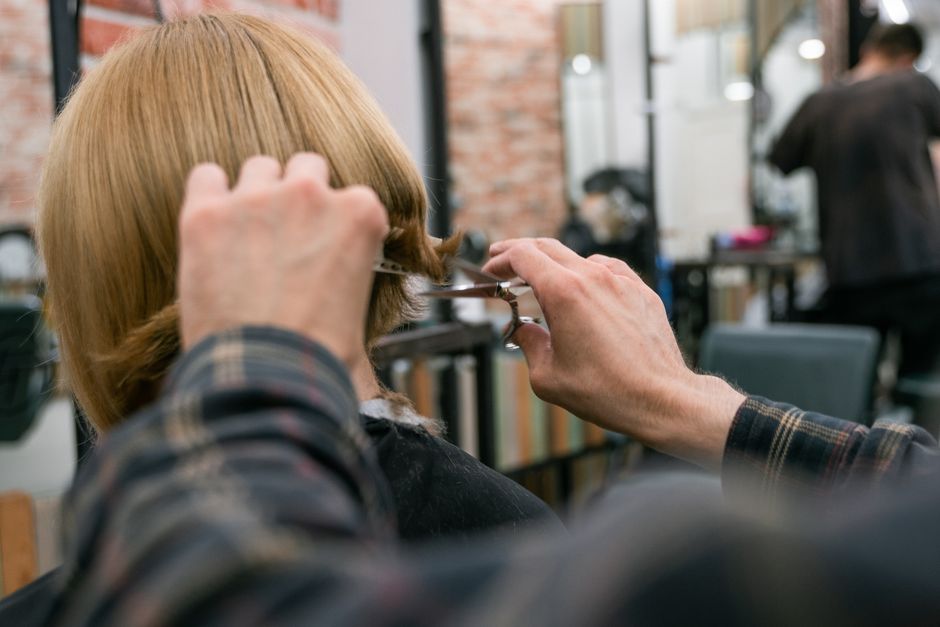
Saturday, 11:20 a.m. Two color chairs sit empty while the front desk fields walk-ins asking for a kids’ trim. Your Google Business Profile still shows last month’s balayage gallery, the primary category is still “Beauty salon,” and the competitor 0.4 miles down the block owns the Maps pack with 412 reviews that name individual stylists. That is the local SEO problem for hair salon companies: high-intent searches never convert into booked chairs because the listing, the service pages, and the proof on the page do not match what someone typing “balayage near me” actually wants.
This is not a brand-awareness exercise. It is a map, a NAP string, a photo of a real foiling setup, and a page that can take a deposit before the searcher taps the next pin. Marketing leaders who own the booking number already know paid CPC is climbing (search CPC has climbed steadily - WordStream’s 2024 benchmarks put beauty-category CPCs above $3 - and there is no sign of relief). Local organic is the channel that should fill weekday gaps without buying every click. It only does that if you treat Google’s local pack, AI Overviews, and your own service URLs as one system.
Where “salon near me” traffic dies before anyone books a chair
Most salon sites still send every Maps click to a homepage that leads with the owner’s story, a hero video, and a generic “Book now” button. The query was specific. Someone wanted a keratin treatment this afternoon, a bridal trial, or a curly cut with a deposit. When the first screen does not name that service, hours, parking, and a stylist who actually does that work, they bounce back to the pack. You paid nothing for the click and still lost the chair.
Category mismatch is the quiet killer. Google still treats “Hair salon,” “Hairdresser,” and “Beauty salon” as different signals. If you color-load 70% of revenue and your primary category is Beauty salon, you will show for waxing and lash searches you cannot take. Secondary categories help, but they do not rescue a primary that points at the wrong job. The same issue shows up in service lists on the profile: “Haircuts” with no price band, no duration, and no distinction between a 25-minute men’s cut and a three-hour vivids session.
Reviews compound it. A 4.8 rating with 40 reviews that say “nice vibe” loses to a 4.6 with 200 reviews that say “Maya saved my bleach-and-tone.” Google’s local algorithm still weights recency, reply quality, and keyword overlap inside the review text. If you never ask for a review on the day of a color correction, you starve the listing of the exact phrases people type. Zero-click search makes this worse: SparkToro’s research has consistently shown ~60-65% of US Google searches end without a click, and AI Overviews are pushing that higher. AI Overviews now sit on more than 20% of queries. If you are not the salon named in the pack or cited in the overview, you do not get the tap.
Mobile is the default path. Over 63% of paid search clicks are mobile, and local salon searches skew even harder to the phone in-hand. If your booker is a third-party widget that takes 4 seconds to paint, or your click-to-call number is a tracking line that fails after hours, the Maps impression never becomes a deposit. As of late 2024 CrUX data, only ~56% of origins pass all three Core Web Vitals. Salon marketers who ignore INP on the booking flow are measuring profile views and wondering why the diary is still soft on Tuesdays.
If the listing and the landing page disagree on hours, address, or which location does extensions, you will feel it as “we rank but nobody calls.” A short audit of those mismatches is often enough to see why local SEO work for multi-location salons has to start with the pack, not a blog about hair trends.
The Maps pack, GBP, and service pages that actually fill color and cut books
Local SEO for hair salon companies is a stack: Google Business Profile as the storefront, one indexable page per bookable service (or per location plus service), and proof that a human can verify in 10 seconds. Rankings follow that stack. They do not follow a monthly post about “spring hair colors” unless that post is built to win a specific query and points internally at a bookable URL.
Start with the jobs the diary actually wants. A color-focused studio should not fight for “cheap haircut.” A barbershop-salon hybrid should split men’s cuts, skin fades, and women’s color onto different pages and different GBP products. Name the neighborhood the way locals search it, not the way the lease reads. “East Nashville balayage” beats “full service salon serving Greater Nashville” every time.
Audit scorecard
-
Primary category and servicesSet Hair salon or Hairdresser as primary if
Primary category and servicesSet Hair salon or Hairdresser as primary if cuts and color are the revenue. Add Barber shop, Makeup artist, or Nail salon only if you truly take those jobs. List 8-12 services with duration and a from-price in local currency so Google can match “balayage $200” style queries.
-
NAP and location truthOne address, one local phone, hours that match the
NAP and location truthOne address, one local phone, hours that match the door including Sunday color days and Monday closures. If you have two suites in one city, two profiles. Do not dump both onto a citywide page with a store locator that hides the booking CTA.
-
Photos that look like the chairUpload weekly: foils on a real client, th
Photos that look like the chairUpload weekly: foils on a real client, the wash bay, the street-facing facade, parking, and the exact product lines you use. Cover photos of stock models get ignored. Name files and alt text with the service plus neighborhood, not “IMG_4388.”
-
Review velocity by stylist and serviceAsk on checkout for the service th
Review velocity by stylist and serviceAsk on checkout for the service they booked. Reply in the first person, mention the service, and invite a rebook. Aim for a steady drip, not a 40-review blast after a campaign. Keyword-rich reviews help the pack more than a perfect 5.0 with silence for 90 days.
-
Q&A and posts that match intentSeed Q&A with parking, kids, deposit, and
Q&A and posts that match intentSeed Q&A with parking, kids, deposit, and “do you take vivids.” Use GBP posts for same-week openings (“two color slots Thursday 2-4”) instead of coupon spam. Posts decay fast. Treat them like ads with a shelf life of days, not a content calendar trophy.
-
Service pages, not a menu PDFEach money service needs a URL with H1, pri
Service pages, not a menu PDFEach money service needs a URL with H1, price band, process, before/after, stylist names, and a booker above the fold. Internal links from the location page and blog posts should use the service name as anchor text. The top results increasingly contain templated or AI-assisted copy - which is exactly why a page written by someone who has actually mixed toner stands out.
-
Schema, speed, and the bookerLocalBusiness plus HairSalon markup, openin
Schema, speed, and the bookerLocalBusiness plus HairSalon markup, opening hours, geo, and Review where accurate. Keep the booking widget’s INP under control on mobile. If the form is a maze of “select location, select stylist, select add-on,” you will rank and still lose the last tap. Session recordings on that form tell you where people stall; HeyLead Insights is built for that post-click view without guessing from bounce rate alone.
-
Citations and duplicatesApple Maps, Bing Places, and the major directori
Citations and duplicatesApple Maps, Bing Places, and the major directories should match GBP exactly. Old suite numbers and closed booth-renter listings split reviews. Suppress duplicates before you chase more citations.
Action checklist
- Export 90 days of GBP calls, direction requests, and website taps. Tag which services the diary actually booked from those days. That is your keyword list, not a keyword tool’s “hair salon” volume chart.
- Rewrite the GBP description in 750 characters around the top three bookable jobs and the neighborhood name people use in conversation.
- Publish or rebuild one service page for the highest-margin empty-chair job (usually color correction, extensions, or bridal). Put the booker, price from, and parking in the first screen.
- Add UTM parameters on the GBP website button so GA4 can separate pack traffic from branded organic.
- Set a 14-day review ask after every color service, with a QR at the chair and a SMS the same evening.
Free tools - try these yourself
Get a free marketing audit - we review your search, ads, and landing pages and send back what to fix first.
Get a free audit
A two-location color studio that ranked for the wrong zip
A Head of Marketing at an eight-chair color studio with locations 11 minutes apart watched both pins sit in the pack for “hair salon” and almost never for “lived-in color.” Website sessions from GBP looked healthy. The books were full of $45 cuts and empty of $280 balayage. The mechanism was simple: one GBP description copied to both locations, one citywide services page, and reviews that never named colorists.
They split the profiles, set Hair salon as primary, listed balayage, gloss, and correction as products with from-prices, and built two location URLs plus one balayage page that used each neighborhood in subheads. The homepage stopped being the GBP landing URL. Within 11 days, direction requests did not jump. Booked color hours increased roughly 30% over the following six weeks. The first-screen copy on the balayage URL named parking, a 48-hour patch test, and the two colorists who actually take those appointments. That was the conversion change, not a new blog cadence.
They also found a duplicate listing for the original booth-renter suite with the old suite number. Until that was suppressed, review equity leaked and hours conflicted. If you run booth renters or a recent move, hunt those ghosts before you spend another hour on citations.
AI Overviews will still summarize “best salons in [city]” without sending a click. Citation share (being named, with a distinct service) matters more than chasing every informational “how to tone brassy hair” article. Information gain beats volume after the March 2026 core update. Write the page only if a colorist would sign their name to the process steps.
What to count so local SEO pays for color hours, not vanity views
Profile views and photo views are vanity unless they sit next to booked services. Wire GBP website clicks with UTMs, call tracking that can be excluded from NAP displays if it pollutes citations, and a booking event in GA4 that fires on deposit confirmation, not on “calendar opened.” Last-click will double-count if you also run brand Search. Treat Maps as an assist and judge the program on cost per booked color hour and fill rate by daypart.
Compare your service pages against the three competitors who own the pack. If they rank with thinner copy and better photos, photos and reviews are the gap, not another 2,000 words. Use a competitor snapshot, then fix the on-page H1 and title so they name the service and the city the way the pack does. Check indexation after you publish. A new location page that never leaves “Discovered” in Search Console will not help the pin.
Watch Core Web Vitals on the booker URL, not only the homepage. A passing origin in CrUX can still hide a widget that tanks INP. Mobile conversion lag of 30-40% versus desktop is common in paid search. Local salon traffic is almost all phone. If desktop looks fine in aggregate, you are hiding the leak.
Reporting should be weekly enough to catch a review attack or a hours error after a holiday, not a monthly PDF of impressions. Attribution across GBP, organic, and branded ads will never be perfect. You still need a clean conversion setup so you are not guessing which service page deserves the next internal links. Tight positioning (which jobs you want) beats adding another directory.
What marketing leaders are seeing
“We were optimizing the Google profile for ‘salon near me’ while the empty chairs were all color. Once we changed the primary services and sent Maps clicks to the balayage URL, Tuesday afternoons started filling without buying more ads.” - Head of Marketing, multi-location hair salon group
“The ranking looked fine. The booker widget was the problem. People tapped from Maps, waited on a spinner, and went back to the pack. We only saw it when we watched the session, not the GA4 bounce rate.” - Founder, independent color studio
FAQs
Do hair salon companies still need a website if Google Business Profile gets the calls?
Yes. The pack is the storefront. The service page is where you hold the ranking for specific jobs, collect deposits, and give Google something unique to cite. GBP alone cannot tell a long color story or host schema at the depth a competitive city needs.
How long before a new location page shows in the local pack?
Expect weeks, not days, especially with a thin review base. Realistic local SEO movement is a 3-6 month program. Same-week ranking claims are not a serious plan. You can still fix categories, photos, and the landing URL this week and feel call quality change before the pin moves.
Should we blog every week for salon SEO?
Only if the post targets a query that can book a chair or support a service page. Trend roundups that never link to a bookable URL burn writer time. One strong service page plus review velocity usually outperforms a graveyard of unindexed posts.
Is Google Ads a substitute for local SEO for salon companies?
No. Ads can fill a sudden hole when a stylist leaves or a competitor spikes. Paid ROAS in local service businesses varies widely - the more important point is that 20-30% of SEM budgets typically leak to irrelevant queries without tight negative keyword management. Local SEO should own “near me” and neighborhood service terms so you are not renting every Saturday click.
What if AI Overviews answer “best salon” without a click?
Optimize to be the named salon: distinct services, reviews, and pages with real process detail. Track visibility and calls, not only organic CTR. Zero-click is the environment. Being the cited brand is the job.
Putting it to work
Execution sprint
This week
- Pull 30-90 days of performance for local seo for hair salons companies (Search Console, ads, CRM, or call logs - whatever you have).
- Flag the top leak: wrong intent, weak page, slow response, or dirty conversion tracking.
- Ship one fix on the highest-traffic money path (page, campaign split, or response rule).
- Run the free tools below on that same URL or account and log the findings.
Free tools for this sprint
Next 30 days
- Expand the fix to the next one or two money paths only after the first one shows cleaner bookings.
- Align creative, keywords, or content with the same offer the page now states.
- Review booked outcomes weekly; cut anything that still only produces unqualified volume.
Pull the last 60 days of GBP actions next to the appointment book and mark which services actually got booked from Maps. That single join tells you whether you are ranking for cuts while color chairs sit empty.
This week
-
Fix primary category, service list, and hours on every profile.
-
Point the GBP website button at the highest-margin service or location URL with UTMs.
-
Upload 10 real in-salon photos and ask five recent color clients for a review that names the service.
-
Run the local SEO checklist and the Core Web Vitals checker on the booker page.
-
Suppress any duplicate listings from old suites or booth renters.
Next 30 days
-
Ship one dedicated page per money service that the diary wants.
-
Align internal links and titles to neighborhood-plus-service queries.
-
Watch booked hours by source weekly, not profile views monthly.
-
Tighten the booking widget until mobile INP stops killing Maps traffic.
If the gap is the handoff between the Maps pack and a bookable service page, HeyLead can own that local SEO loop for hair salon companies, from GBP and citations through service-page conversion and tracking that ties pack taps to deposited appointments. Chat with us on WhatsApp
Free marketing audit, or reach Martin directly:
Get a free audit Connect on WhatsApp · martin@heylead.com