
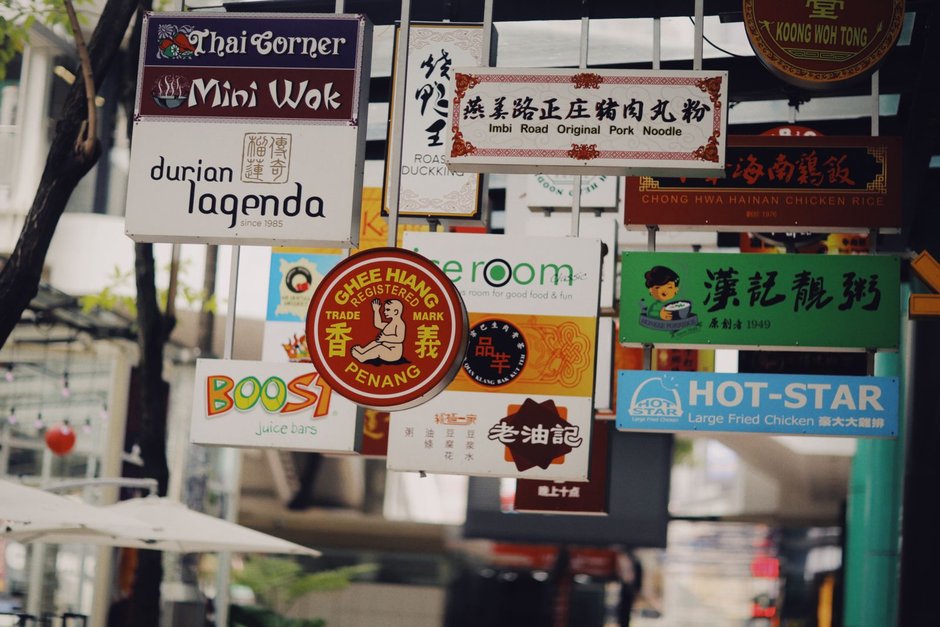
If some of your customers search in Chinese and your site only has English pages, or a machine-translated copy nobody has checked, you are missing searches your competitors can win without much effort. Chinese language SEO in Singapore does not mean translating your whole website. It means building a few Chinese service pages, written the way people here actually talk, and telling Google clearly which version is for whom.
Most local service sites skip this step or do it badly. The translated pages read like a mainland brochure, use words Singapore customers rarely type, and are often invisible to Google because a language toggle swaps text on the same URL.
This guide covers three things in the order you would do them: deciding whether Chinese pages are worth it for your business, setting up URLs and hreflang so Google understands both versions, and writing local terms that match real searches.
When Chinese pages are worth building for your business
Chinese pages make sense when you can already serve Chinese-speaking customers well, and you suspect some of them can’t find you. Look for these signals:
- Customers already call or WhatsApp you in Mandarin. If you or your staff regularly switch languages on the phone, some of those people probably searched in Chinese first.
- You sell services people buy for their home. Aircon servicing, plumbing, renovation, pest control, cleaning, movers, locksmiths and handyman work are all searched by homeowners of every age, including older residents and adult children arranging help for their parents.
- Search Console shows Chinese queries. Open the Performance report in Google Search Console and scan the queries list. If you see Chinese characters even though you have no Chinese pages, Google is already matching you to those searches, just not very well.
- Competitors rank with Chinese pages. Search your main service in Chinese on your phone. If a competitor shows up with a proper Chinese page and you don’t, that gap is yours to close.
Chinese pages are not worth building yet if nobody on your team can reply in Mandarin. A Chinese page that leads to an English-only phone call loses the customer at the worst moment. The same applies if you can’t keep two versions of your prices, service areas and promotions in sync. An outdated Chinese page does more harm than no page at all.
Our rule is simple: only publish in Chinese what you can answer in Chinese.
Chinese language SEO in Singapore: write the words people actually type
This is where most bilingual sites fail. Machine translation, and many freelance translators trained on mainland usage, produce formal Mandarin that is correct on paper but doesn’t sound like Singapore. Customers notice right away, and so does the search data, because people don’t type words they don’t use.
Local terms versus textbook terms
Here are some examples of the gap. Treat them as starting points to test, not a final list:
- Aircon. Many Singapore speakers say 冷气 rather than the mainland 空调, so 冷气清洗 or 冷气维修 may match better than 空调维修. Some people type the English word with Chinese, like “aircon 清洗”.
- Home types. An HDB flat is 组屋, a condo is usually 公寓, and landed property is 有地住宅. A translator who writes “public housing apartment” in long form misses all of these.
- Renovation. 装修 is the core word, often combined with the home type, such as 组屋装修.
- Leaks and blockages. 漏水, 天花板漏水 for ceiling leaks, 防水 for waterproofing, and phrases around 厕所堵塞 or 通厕所 for a choked toilet.
- Pests. 灭虫 for pest control and 白蚁 for termites.
- Places. Customers may write the estate in Chinese, such as 淡滨尼 (Tampines), 宏茂桥 (Ang Mo Kio), 兀兰 (Woodlands) or 裕廊 (Jurong), or keep it in English. Your page should include both.
Mixed-language searches are normal here. Someone might type “HDB 装修 价钱” or “aircon 维修 Bedok”. Your Chinese page should naturally include the English words people keep in English, like HDB, aircon and estate names, instead of forcing everything into characters.
How to find the right Chinese keywords for Singapore services
You don’t need a big research budget to find the right Chinese keywords for Singapore services:
Steps
- Ask whoever takes Mandarin calls which words customers use to describe their problem. Write them down exactly.
- Type those words into Google on a phone with location set to Singapore, and note the autocomplete suggestions.
- Look at which pages rank and what words they use in their titles.
- Check your Search Console queries every few weeks once the pages are live.
Then have a native Singapore Chinese speaker write the page from scratch, or at least rewrite the translation line by line. The page should answer the same questions as your English page: what you fix, which areas you cover, how fast you come, how you quote and how to reach you. It doesn’t have to be a word-for-word copy.
Picking URLs for a bilingual website in Singapore
A bilingual website in Singapore needs each language version at its own address, so Google can index both and show the right one. Here are your options:
- Subfolder, like yoursite.com/zh/aircon-servicing/. This is what we recommend for most local businesses. It keeps everything on one domain, so the Chinese pages benefit from the authority your English site has built.
- Subdomain, like zh.yoursite.com. This works, but it is more setup for no real gain at this size.
- Separate domain. Avoid it. You would be starting a second website from zero.
- Same URL with a language toggle. This is the most common mistake. If a button or script swaps the text without changing the URL, Google usually sees only one language, and your Chinese content may never get indexed.
A few more decisions to get right:
- Keep slugs in English or simple pinyin. Chinese characters in a URL get turned into long encoded strings when copied into WhatsApp or email, which look messy and untrustworthy. /zh/aircon-servicing/ is fine.
- Don’t auto-redirect by browser language or location. Someone with an English phone may still want the Chinese page, and Google’s crawler needs to reach both versions. Use a visible language switcher instead.
- Link the switcher to the matching page. The 中文 link on your English plumbing page should go to the Chinese plumbing page, not the Chinese homepage.
- Translate the title tag and meta description. These are what people see in search results, and an English title on a Chinese page wastes the click.
You don’t need to translate every page. Start with your two or three highest-value services and your contact page. Pages with no Chinese version simply don’t get a Chinese pair.
Setting up hreflang zh-SG step by step
Hreflang is a small piece of code that tells Google “these two pages are the same content in different languages, show the right one to the right person.” Without it, Google has to guess. Here is the setup your web person should follow for each page pair:
- Publish the Chinese page at its own indexable URL. Make sure it isn’t blocked in robots.txt, isn’t set to noindex, and has a canonical tag pointing to itself. A Chinese page with its canonical pointing to the English page tells Google to ignore it.
- Set the language on the page. The HTML tag on the Chinese page should declare the language, for example
<html lang="zh-SG">, and the English pagelang="en-SG". - Add hreflang tags to the head of both pages. Each page lists itself and its partner, plus a default for everyone else:
<link rel="alternate" hreflang="en-SG" href="https://yoursite.com/aircon-servicing/" />
<link rel="alternate" hreflang="zh-SG" href="https://yoursite.com/zh/aircon-servicing/" />
<link rel="alternate" hreflang="x-default" href="https://yoursite.com/aircon-servicing/" />
- Put the identical set on both pages. Hreflang only works when the pages confirm each other. If the English page points to the Chinese one but not the other way around, Google may ignore the pair.
- Use full URLs, exactly as they appear live. Include https, the same www or non-www version, and the same trailing slash as the real page. A link that redirects weakens the signal.
- Only pair true equivalents. Don’t point your English aircon page at your Chinese homepage because no Chinese aircon page exists yet. Leave unpaired pages without hreflang.
- Add the Chinese URLs to your XML sitemap and submit it in Search Console.
- Test before and after launch. Our free hreflang tag generator writes the tags for each pair, and the hreflang checker confirms the live pages point at each other correctly. Then use URL Inspection in Search Console to request indexing of the new Chinese pages.
If your site runs on WordPress or another common platform, a multilingual plugin can handle most of this automatically. Check the output anyway. Plugins often default to a plain “zh” code, add pairs for pages that were never translated, or leave the switcher pointing to the homepage.
Making the Chinese pages bring in calls and WhatsApp messages
Ranking is half the job. The Chinese page then has to make contact feel easy for someone who prefers Mandarin.
- Say clearly that you speak Mandarin. A line near the top such as 我们可以用华语沟通 reassures people that they won’t hit a language wall when they call.
- Make WhatsApp the main button. Most Singapore customers would rather message than fill in a form. Set the click-to-chat link with a prefilled message in Chinese so it starts the conversation in the right language and you know which page they came from.
- Route calls to someone who can answer in Mandarin. If that person isn’t always available, say when they are.
- Translate the form too. Labels, error messages and the thank-you message should all be in Chinese.
- Show local proof. Photos of jobs in HDB flats and condos, the estates you cover and your licenses or certifications build trust in any language.
- Track Chinese leads separately. In GA4, filter conversions by pages starting with /zh/ so you can see whether the Chinese pages bring in real inquiries, not just visits.
Your Google Business Profile still matters for searches in both languages. When Chinese-speaking customers are happy with a job, ask them to leave a review in whichever language they’re comfortable with, mentioning the service and the area. If you want help tying your Chinese pages into your map rankings and service-area strategy, that’s part of our local SEO work for service businesses.
Frequently asked questions
Should my Singapore site use Simplified or Traditional Chinese?
Simplified. It’s the standard script in Singapore schools, newspapers and government communication, and it’s what local customers type. Traditional Chinese pages would look out of place to most of your audience.
Is zh-SG the right hreflang code, or should I use zh-Hans-SG?
Both are valid. zh-SG is the usual choice for a Singapore site and is simpler to maintain. What matters more is using the same code on every page pair and making sure each pair links back to the other.
Will Chinese pages count as duplicate content and hurt my English rankings?
No. Translated pages are not treated as duplicates, and correct hreflang tells Google they are alternate versions of the same page. The risk comes from bad setup, such as a Chinese page canonicalized to the English one, which hides it from search.
Can I start with AI translation and have someone fix it later?
You can use it as a rough draft, but don’t publish it unedited. Raw machine translation tends to pick mainland terms like 空调 where locals may say 冷气, and phrasing that sounds stiff. A native Singapore Chinese speaker should rewrite it before it goes live, because “later” often never comes.
Do I need Chinese versions of every page on my site?
No. Start with your best-earning services and your contact page. Add more once you see Chinese queries and inquiries coming through. A small set of strong Chinese pages beats a full site of weak ones.
My Chinese-speaking customers often type in English anyway. Is this still worth it?
Some will, and your English pages already cover them. The Chinese pages are for people who search in Chinese or mix both languages, like “HDB 装修”. If Search Console shows that kind of query and your phone already rings in Mandarin, those are the customers you’re missing.
Your next step
This week, ask whoever handles your Mandarin calls to write down five phrases customers use to describe their problem, then check Search Console for any Chinese queries you already appear for. If both point the same way, pick your single best service and plan one properly written Chinese page with hreflang set up from day one.
If you’d like us to look at your site and tell you whether Chinese pages are worth it for your business, Chat with us on WhatsApp.