
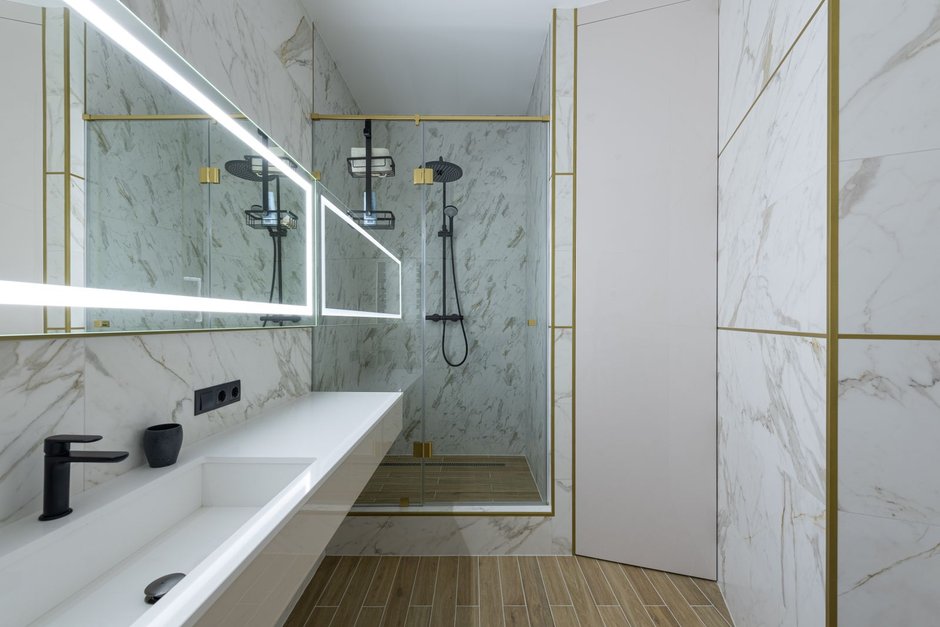
Most wet room pages lose grant-funded jobs because they never explain how the grant works. A family searching for a wet room disabled facilities grant wants to know who visits, what gets assessed, who pays, and where you fit in. If your page only shows tiles and a “Get a quote” button, they go back to the search results and find someone who explains it.
These families are usually not shopping for style. Often it’s a daughter arranging an adaptation for a parent, or parents arranging one for a disabled child. They are dealing with the council or the Housing Executive, an occupational therapist and forms they have never seen before. They want an installer who has done this before and can explain it calmly.
In this post we’ll show you how to build a wet room landing page that explains the grant process and the occupational therapist assessment in plain words, and turns that reassurance into booked surveys.
What families need from a wet room disabled facilities grant page
Someone landing on your page from a search like “dfg bathroom adaptation near me” has three questions, usually in this order:
- Can we get help paying for this? They have heard of the grant but don’t know if it applies.
- What happens next, and how long will it drag on? They want the steps, not a sales pitch.
- Can this company actually do it? They want proof you’ve worked on grant-funded jobs and can work with the council.
A standard bathroom page answers none of these. A good grant page answers all three before it asks for anything.
Be clear about your role, too. You are not the council and you don’t decide who gets the grant. Say that plainly. Families trust an installer more when it admits what it doesn’t control. The Disabled Facilities Grant is run by local councils in England and Wales and by the Northern Ireland Housing Executive in Northern Ireland. Scotland has no DFG, but councils help with adaptations through their own Scheme of Assistance. Each area runs its own process, so tell visitors to check with their council (or the Housing Executive in Northern Ireland) and offer to help them make sense of the answer.
Walk through the grant in the order the family lives it
Don’t write the grant section like a policy document. Write it as a short journey, with one plain sentence for each stage. Describe the process as it usually runs, and use words like “usually” and “most councils” because the details vary.
Here is the shape that works on most pages:
- First contact. The family, or someone helping them, contacts the council’s adult social care or housing team and asks about an adaptation. For a child, the request often goes through children’s services. In Northern Ireland, grant applications go to the Housing Executive instead.
- The occupational therapist visit. An OT comes to the home, looks at how the person moves and bathes, and recommends what’s needed. That might be a level-access shower, a wet room, grab rails or a wider door.
- The financial check. For adults, the grant body usually looks at household income and savings to work out what the grant covers. Grants for disabled children are generally treated differently. Tell readers to ask their council (or the Housing Executive in Northern Ireland) how their own case works.
- Quotes and the application. The council usually wants quotes from installers, and sometimes drawings, that match what the OT recommended. Some councils use a home improvement agency to manage this part.
- Approval, then work. Most councils won’t fund work that starts before the grant is approved. Put this in bold on your page, because it’s the mistake families most need to avoid.
- Inspection and payment. Once the work is done, the council checks it. Payment often goes straight to the installer.
Then add one line that links back to you: “We can survey your bathroom and prepare a quote that follows your OT’s recommendations, ready for your grant application.” That’s your role, stated in a way a worried family can act on.
Write the occupational therapist part so nobody panics
The OT visit worries people. Some families think it’s a test they can fail. Others think the OT will take over the design. Your page can settle both fears in a few short paragraphs.
What to say about the visit
Explain that the OT is there to understand daily life in the home: getting in and out of the shower, turning in the space, whether a carer helps. Tell them it’s normal for the OT to ask about future needs as well as current ones. Suggest they have the person who’ll use the bathroom present, along with whoever helps them day to day.
What to say about your part
This is where an accessible bathroom installer earns trust. Explain that you build to the OT’s recommendations, and that if something in the room makes a recommendation hard, such as floor levels, drainage or where the waste pipe runs, you’ll raise it early so the council can decide. Families want to hear that you won’t quietly change the spec.
What not to say
Don’t promise anyone will qualify. Don’t suggest how much the grant pays, as that depends on the grant body and the household. Don’t use phrases like “fully funded” unless you’re quoting the council directly. Make promises you can keep, such as “we’ll explain every line of your quote” or “we’ll talk to the council surveyor for you if they have questions.”
Build the page: steps for you or your web person
Here is the build order we use. Hand this list to whoever edits your site.
- Give the grant its own page. Don’t bury it as a paragraph on your main bathrooms page. A dedicated page lets you match the search, answer the questions properly, and send ads straight to it.
- Put a plain summary at the top. Two sentences: you install wet rooms and level-access showers, including jobs funded through the Disabled Facilities Grant, and you can quote to an OT’s recommendations. Add the survey button right under it.
- Add the journey section from above, written as short steps with simple headings. Keep each step to two or three sentences.
- Add an OT section that explains the visit and your role, using the tone above.
- Show real accessible jobs. Use your own photos of level floors, shower seats, rails and wide doors. Add a sentence on each about what the room needed and why. Skip stock photos.
- List the practical details families ask about: how long a typical install keeps the bathroom out of use, whether you can fit a temporary solution, how you handle dust and noise when someone vulnerable lives there, and whether you’re on your local council’s contractor list if that applies.
- Write an FAQ block using the questions you hear on the phone. Then add FAQ structured data with our FAQ schema generator so search engines and AI tools can read your answers clearly.
- Make contact easy for different people. Offer a short form, click-to-call, and WhatsApp if you use it. Many family members do the arranging around work and prefer to message.
- Make sure it loads fast on a phone. Many of these visitors are reading on a mobile at a hospital or a parent’s kitchen table. Run the page through our Core Web Vitals checker and fix anything slow.
If you’d rather have this built properly the first time, our team does bathroom renovation website and landing page design with this kind of page in mind.
Survey requests that fit a DFG bathroom adaptation
A grant job doesn’t start with a price. It starts with a survey. So your call to action should say “Book a free survey” or “Request a survey for a grant-funded wet room”, not “Get a quote now”. That wording matches where the family actually is.
Keep the form short and respectful
Ask for:
- Name, phone and postcode
- Who the bathroom is for (themselves, a parent, a child, a tenant)
- Where they are with the grant: not started, OT has visited, waiting on a decision, approved, or paying privately
- Best time to call and preferred contact method
That “where are you with the grant” question does a lot of work. It tells your team how to open the call, and over time it shows which stage your best leads come from.
Don’t ask for medical details on the form. Health information is sensitive under UK data protection rules, so collect it only when you need it and with care. A simple “Anything we should know before we call?” box is enough.
Serve the private payers too
Some families won’t qualify, or won’t want to wait for a grant decision. Don’t lose them. Add a short line such as: “Not using the grant? We also do private wet room conversions.” Link that to your wet room conversion quote form.
Track which pages book jobs
Grant jobs can take a long time to go from first contact to finished room. If you only count form fills, you’ll never know which page or ad produced the work. At minimum, record form submissions, calls and WhatsApp clicks as conversions. Then mark which leads turned into approved jobs. If you run Google Ads to this page, offline conversion tracking lets you send those won jobs back to the ad account so it learns which searches bring real work.
Frequently asked questions
Should I mention the Disabled Facilities Grant if I’m not on my council’s approved contractor list?
Yes, but be honest about it. Some councils let the family choose their own installer and others work from a list. Say which applies to you in the areas you cover, or tell visitors to check with their council (or the Housing Executive in Northern Ireland). Overstating your status is the quickest way to lose a family’s trust.
Can my page tell visitors whether they qualify for the grant?
No. Only the council, or the Housing Executive in Northern Ireland, decides, usually after the OT visit and a financial check for adults. Your page can explain the usual steps and point people to the right body. Then offer a survey so they have a quote ready when it asks for one.
What if the OT recommends something I think won’t work in that bathroom?
Explain on your page that you raise these issues early and in writing, so the council can decide. Families want to know you’ll stick to the recommendations and flag problems, not quietly swap things out. It also protects you if the council inspects the finished work.
Should I have separate pages for wet rooms and walk-in showers on grant jobs?
If you get searches and calls for both, yes. A family told by the OT that they need a level-access shower may not search for “wet room” at all. A second page aimed at that wording, with the same grant explanation, catches searches the first one misses.
Is it worth running Google Ads to a grant page, given how slowly these jobs move?
It can be, as long as you track beyond the form fill. These jobs take months, so judge the ads by the surveys and approved jobs they produce, not by clicks in the first week. Send ads straight to the grant page, not your homepage.
How do I handle calls from council staff or home improvement agencies who find the page?
Give them a clear route. A short line near the bottom, such as “Council officer or agency? Call or email us directly about a client’s adaptation,” helps professionals reach the right person without filling in a family-focused form.
Your next step
This week, write down the last five questions families asked you about the grant on the phone, and turn each one into a short, plain answer. That list becomes the core of your grant page and its FAQ, and it costs you an evening, not a rebuild.
If you’d like us to look at your current wet room pages and show you where grant-funded families are dropping off, Chat with us on WhatsApp.